Pragmata – Totally Not What I had Anticipated
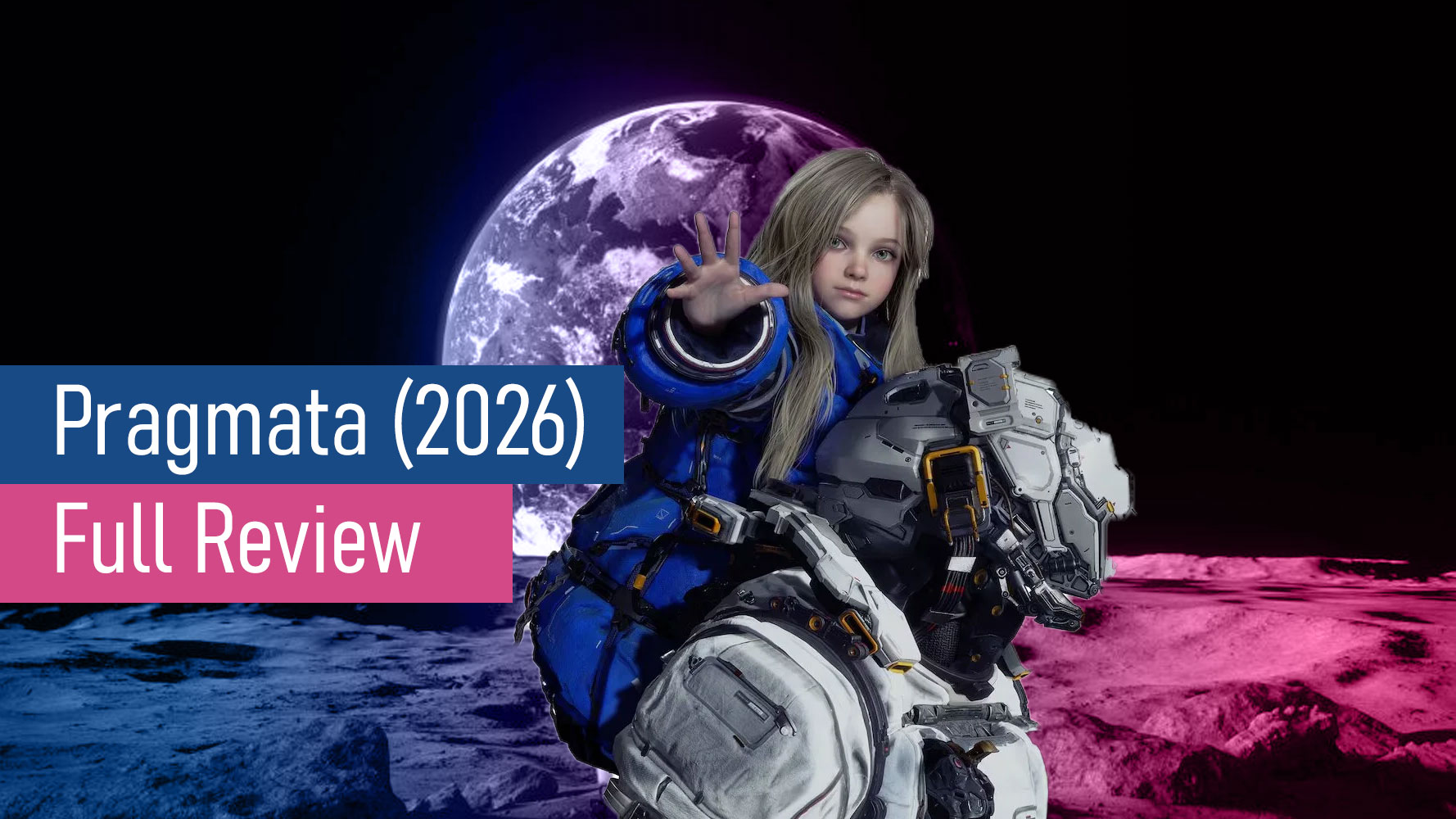
Pragmata was one of the first games announced when the Playstation 5 was unveiled all the way back in 2020. The game showed a weird version of New York, a man in a space suit, and a child with a hologram cat. The trailer then went off the rails and basically the city started twisting on itself and the man and the girl were shot to the Moon. That was it. Pragmata was unveiled and then the game went radio silent for nearly 5 years. The game became a bit of a joke on the internet. You may remember back at the unveiling of the PS4 that Capcom showed off a game at that event called Deep Down, a game that evoked a Dark Souls style game that was never seen from again. Many people started to openly comment that Pragmata had met a similar fate as Deep Down and much to my surprise last Summer the game resurfaced with a fresh gameplay trailer proclaiming that it was coming in early 2026. So, here we are now. Pragmata is out and it is a surprising game in many ways that I strongly recommend if you like third person action shooters and are open to a puzzle mechanic similar to Pipe Dream tossed in.
I normally start with story details in these reviews but the giant elephant in the room here is the puzzle mechanics, so lets start with gameplay this time around. Pragmata plays out as kind of a mix between the PS3-era Platinum Games overlooked gem, Vanquish. Much like that game you are a dude in a big hulking suit with flashy weapons and the ability to kind of boost around the playfield to avoid enemy fire and melee attacks. The boosting is also used to great degree for platforming to solve puzzles and find items and chests through the different biomes you explore during the game. In Pragmata you have a main side arm style weapon by default. At first it is a simple 6 shot pistol and can be upgraded over time and eventually you get a machine gun style weapon for that slot that packs less punch but can stagger enemies. Staggering enemies and exposing their weaknesses is key to the combat. The robots that you fight are strong with all of their armor in place and shooting them without exposing their weak spots and shooting them is going to be a waste of time and precious resources.
That leads me to the next portion of the gameplay and where the game really starts to toss a curveball at you. Early in the game you meet a small android girl named Diana. She rides on your shoulders in gameplay and when you get close to a robot and focus on them, a grid pops up on the screen and you can then start a puzzle unlock where you use the face buttons on the controller to navigate a puzzle to pick up power ups and hack the enemies to open up their weak spots. It is important to note that when I first heard this I pictured the game slowing down or even pausing for this and that seemed unappealing to me. That is not the case. Nothing slows down when you are solving the puzzles. You are still moving, dodging, shooting, etc. in real time while you perform the puzzle solving. It is a wild mechanic that at first I was not great at and also worried would get stale by the end of the game. But, fortunately for me and the game as a whole, the game continually unlocks new pieces and upgrades to keep the design and puzzle gameplay fresh and satisfying. The last piece that I will mention about the raw moment to moment gameplay is that the game will throw 5 or more enemies at you at a time and the arenas are often very cramped which makes your ability to multitask key. Managing a complex hack where you’re picking up huge boosts to the hack attack power while also dodging a major attack from another nearby enemy is exciting and keeps the conflicts consistently entertaining and satisfying.
The story in Pragmata is also something that really threw a curveball at me and managed to completely subvert my expectations. In Pragmata you play as a guy named Hugh who travels to the moon with 3 of his cohorts to see what is going on with the moon base. It has stopped communicating with earth and they are sent to see what is going on. When they arrive they are greeted by no one. No people around anywhere. No bodies or blood. Just an empty space station. It doesn’t take long before a threat unveils itself and Hugh is now on his own. It is at this time he makes the acquaintance of an android girl named Diana who quickly proves that she is going to be an integral piece to Hugh’s mission to figure out what happened on the moon and getting in contact with Earth to get home.
You quickly realize that the moon has been used to mine a filament for 3D printing and that all of the printers on the moon have kind of gone haywire and started printing and printing and printing. Most of what the machines are printing are objects and places from earth. Pretty early in the game you stumble upon a completely insane 3D printed version of Time Square in New York. But, much like with real like AI art, the printers don’t seem to understand a lot of what goes into Time Square. Some cars are half-printed in the ground or on the sides of buildings. It is almost as-if the AI here that is running the printers understands the objects but not what they do. It is like it has only seen pictures of earth and doesn’t understand how all those things work together. You get the same kind of vibe from Diana. She lived most of her life in storage by herself and hasn’t had really any interactions with people and doesn’t understand how much of this world is supposed to work. So, on the way many of the collectibles are things for Diana to see and play with back at your home base. Early on you get globes, a camping tent, RC cars, etc. Also, while you are out on missions in between combat scenarios Diana will ask Hugh a litany of questions about earth and family much like your average 7-year-old would. The thing I liked about these interactions the most is how she is completely unaware about anything bordering on emotion so her reactions to Hugh’s replies would usually be pretty funny and I appreciated the humor to break up the scenarios.
I know what you’re thinking. Oh it is time for another reluctant father figure story where the cold-hearted single guy has to become a caretaker to a child. It is like every writer in video games in the last decade had a child and felt like they were now the spokesperson for fatherhood (I am mainly gesturing toward most of the Sony output here). No, instead the bond that Hugh and Diana form is fun and goofy and Hugh comes off as more of a goofy Uncle than a father figure. He is also a goofy guy that occasionally waxes weirdly poetic about youth and perception on his place in the world. It comes off at times a little corny but it is delivered well enough. When it is time for the game to reach a dramatic climax they do up the intensity and the bond does solidify but it doesn’t end up feeling unearned or rushed. Hugh goes on a ride with Diana from being a person who says in the first 5 minutes of the game that fatherhood never appealed to him to going on an adventure with Diana and hours later doing whatever he can to get answers to where she came from and fulfill a promise to get her to earth.
That adventure that they go on travels through some of the most technically interesting and impressive environments in a game I have seen in a while. The game almost plays out like a reverse Resident Evil game environmentally. You start in a pretty sterile lab environment and then you end up traveling to a wild interpretation of Times Square, a forest environment with a printer gone wild creating a vastly overgrown forest, and an outdoor environment on the space of the moon with a gargantuan mining machine that looks like a giant worm that you have to avoid by not touching the surface. The environmental variety and attention to detail is something that I really appreciated. The designers took the time and care to create a set of locations for you to travel to that look awesome but are incredibly satisfying to explore given their complex structure and puzzle solving nature.
The game looks fantastic. Resident Evil Requiem was a big hit for Capcom a couple of months ago and this game uses that same Reach for the Moon technology and brings the entire suite of goodies along with it. So, if you are on PC you will still have access to the full Ray tracing and Path tracing tech and even on the consoles the game just looks great. Before writing this review I sat down with the demo for the Switch 2 version and just like Resident Evil Requiem I was really taken back by the quality of the visuals on the display. This game takes more chances with their environmental choices and maybe lacks some of the startingly photorealistic visuals from RE9, but I would argue that the character models, specifically the performance capture and hair for Diana might look better than even some of the best that Re9 brought to the table.
Overall Pragmata surprised me. I tried to keep myself pretty uninformed before I picked the game up. It was a new action game from Capcom, I didn’t need to watch a whole bunch of trailers or gameplay to know that it was probably something I would be into. The end result is a game that consistently kept me coming back for more. I ended up getting nearly all of the achievements and am going to go back and mop up the rest of them after this review goes out. I clocked in right around 16 hours with it. The game also offers some goodies to players once the game is completed. Once you finish the game it offers you the opportunity to go back to the last act of the game and play it with extra content ie more levels and challenges to complete. It is also the chance for you to go and mop up any collectibles or unlocks you had missed along the way because it is important to note that Pragmata has a definitive ending. When the story ends the world is changed and it wouldn’t make sense to have you go back after the credits and do more in the world. So, having this alternative final act to play through is a great way to sidestep that without having to do one of those corny POINT OF NO RETURN screens you find in some games. In that way I respect Pragmata. Most games are built to sell you a sequel and we might one day get a sequel to Pragmata but it doesn’t need it. They tell their story in these 16 hours and that is great. I had an entire experience with Hugh and Diana and I am happy that I did because Pragmata is one of the best games of 2026.
I give Pragmata 5/5 Stars.